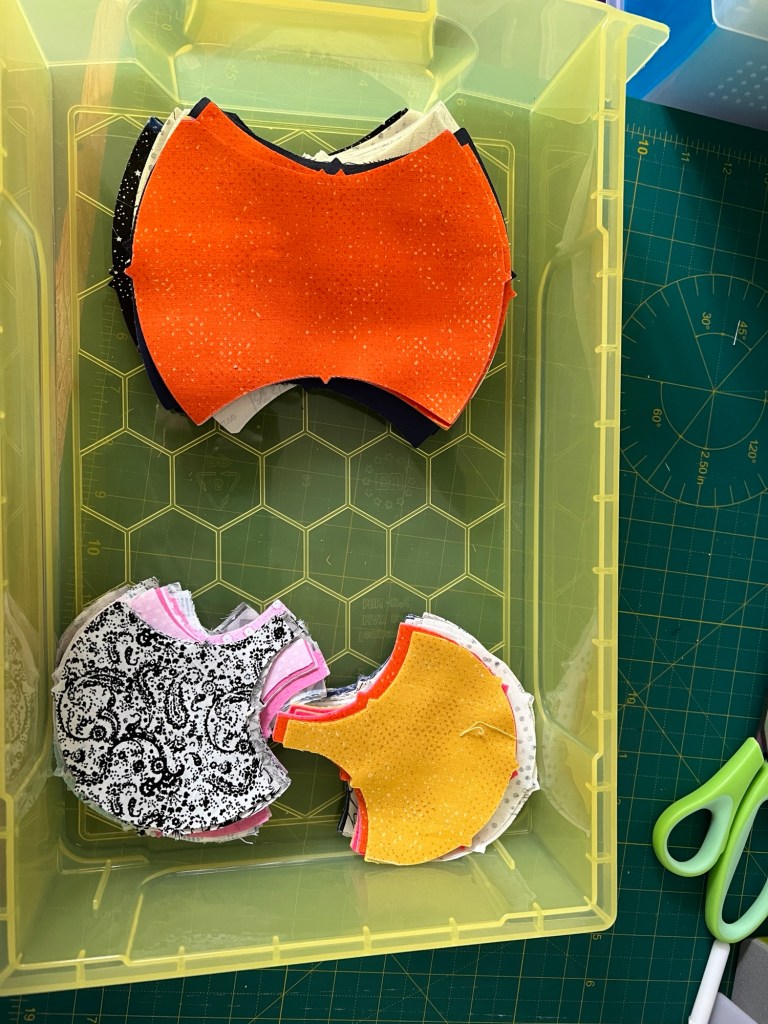
Sometimes we can obsess with perfection. The top shape in this drawer is an apple core it has 2 concave, and 2 convex sides. When these patches are sewn into pairs a convex curve is sewn into a concave side.
*we can ignore the clamshells at the bottom they just happen to share the drawer.
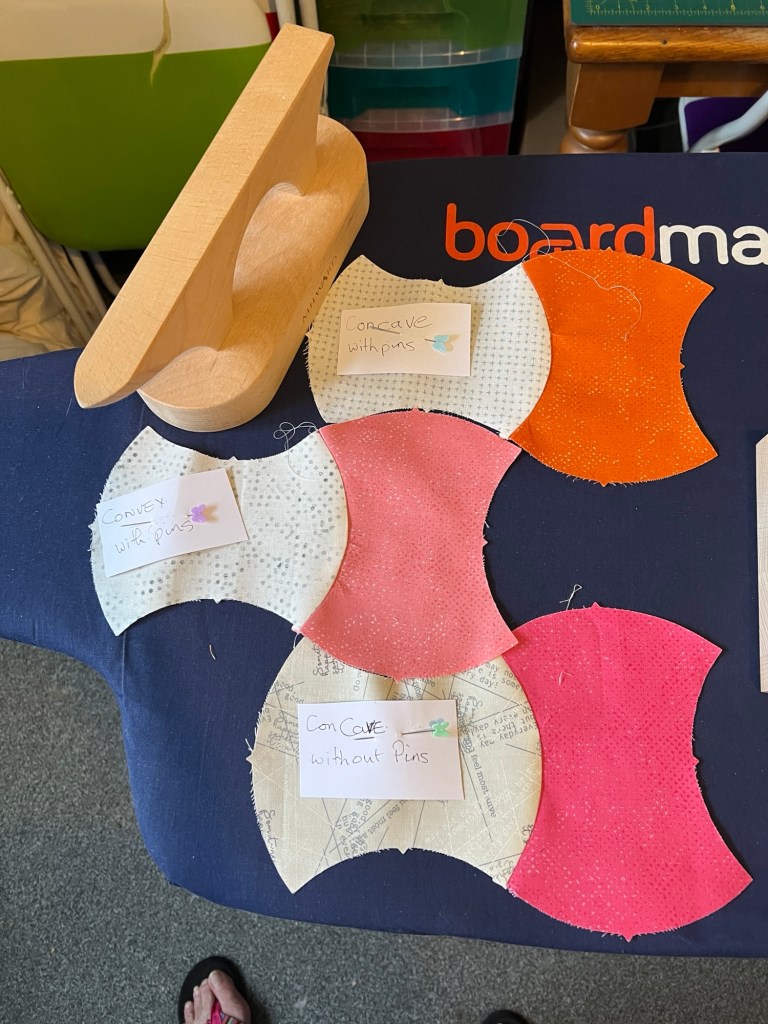
Here are the apple core pairs (the notes are just how I experimented to find the best/ easiest way to sew them together .
For me I found without pinning with the convex shape on top easier. All 3 ways needed constant adjustment and sewing small increments patiently

Then it was time to sew pairs into 4-patches the aim was to get the seams to meet in the middle like in this example.
To achieve this I put a pin in to hold the seam in place, sewing out from the pin to the edge, before I turned the patch to sew from the middle to the other edge.
I decided that was too cumbersome.
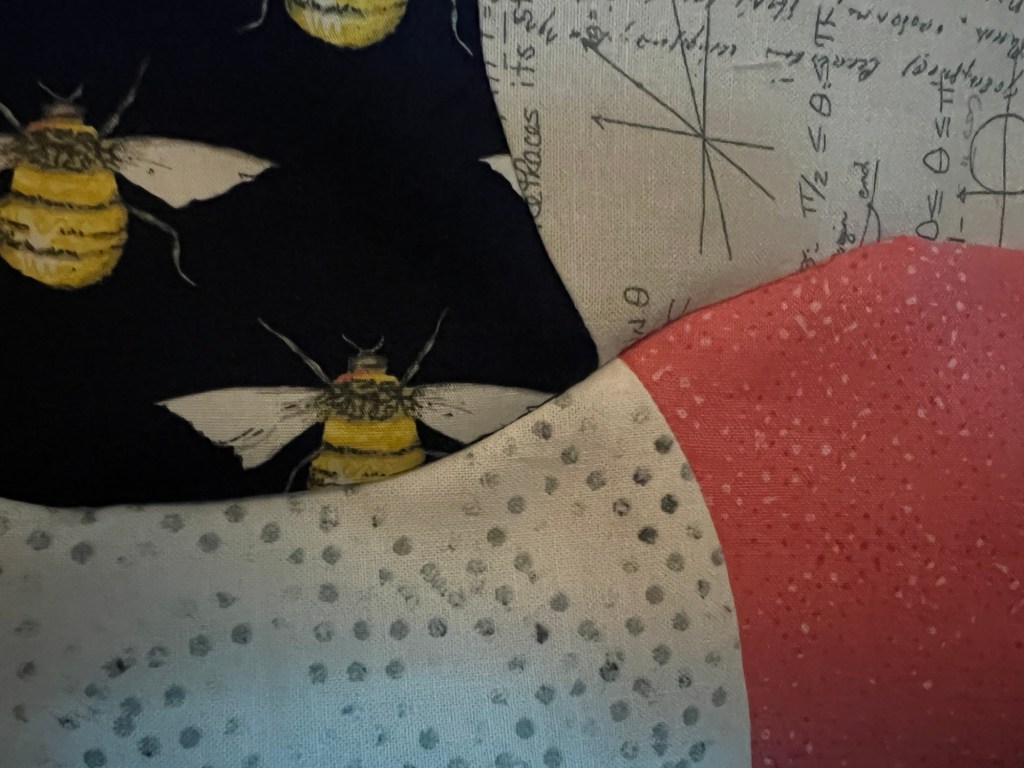
However I’d already made a four patch by simply sewing from one side to another without pinning getting a bit of seam drift (an eighth of an inch).
How could I stop this drift.
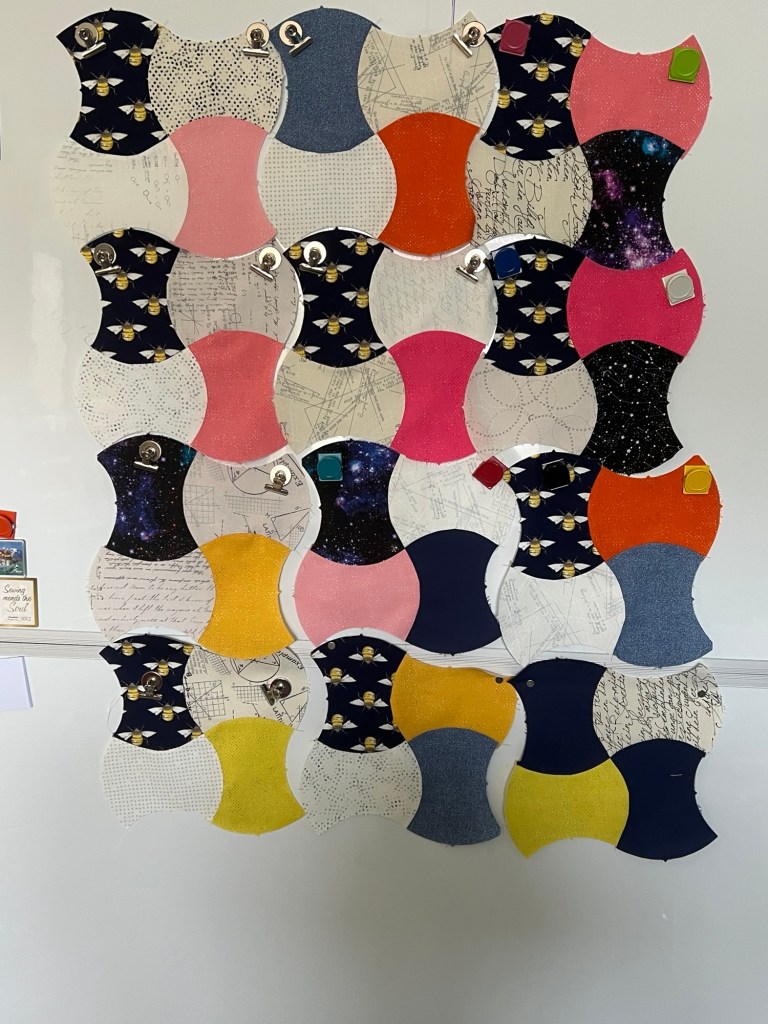
As I got closer to the middle concentrating on nesting the seams meant the majority are perfect or near enough (sixteenth of an inch or less) but even the few with an eighth of an inch aren’t glaringly visible unless you go looking for them.
I managed to make 5 “perfect” 4 patches, 3 with a drift of an eighth of an inch, and 4 with a sixteenth of an inch
Just a reminder we aren’t going to achieve perfection here on earth. We can and should try to improve but we must remember that perfection doesn’t matter so much if we’re only an eighth of an inch out or a sixteenth we need to do our best with what we have.
As we dedicate ourselves to build our skills we will find we can do more than we thought we could.
A parable of me as a quilter being too stubborn to give up when I felt my sewing wasn’t working this weekend. I hope it will help with any challenges you face at this time.
 Was that a dinosaur? 2.0
Leave a comment